 Almabsat
 العربية
 English
 中文
中文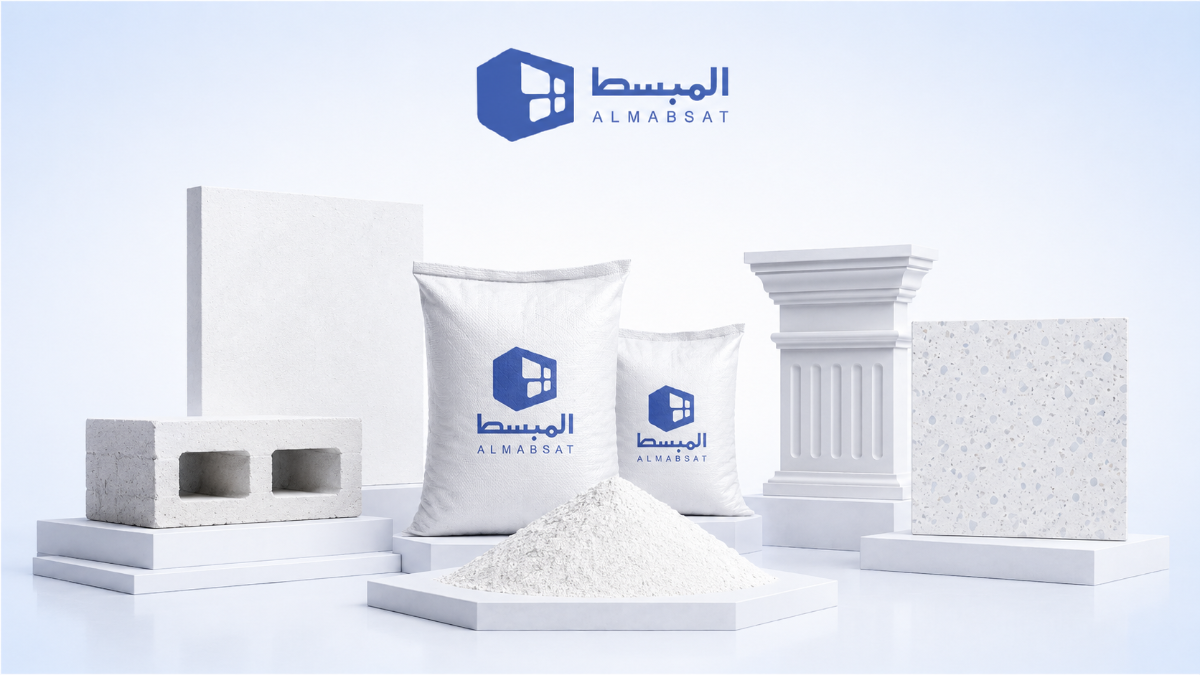
Have you ever wondered what white cement is and what makes it the standout choice in the world of construction? White cement is one of the essential materials in carrying out luxury architectural projects, thanks to its purity and attractive appearance that adds a touch of creativity and elegance. Let's explore together its advantages and uses that have made it the perfect solution for meeting the demands of modern design and high quality.
What is white cement? Discover the secret of strength and beauty in construction
What is white cement? It is a special type of cement distinguished by its pure white color. White cement is produced through a process similar to that used to make traditional gray cement, but it contains special components and specifications that enhance its white color and clarity. White cement is mainly used in architectural work that requires an exceptional aesthetic appearance, as it is able to give buildings a luxurious, durable character. In addition to its beauty, it offers high resistance to environmental factors and is an ideal choice for many applications such as interior and exterior finishes and decorative designs.
Get Riyadh Cement - White from Almabsat now, the ideal choice for your advanced, durable construction projects. Riyadh white cement is used in a wide range of applications such as ready-mix concrete that delivers exceptional strength and rigidity, footings and foundations that ensure the stability of buildings, and the manufacture of concrete pipes that withstand high pressure. It is also used in precast concrete structures known for their efficiency and high quality, as well as the manufacture of bricks and tiles that enhance the beauty and durability of finishes.
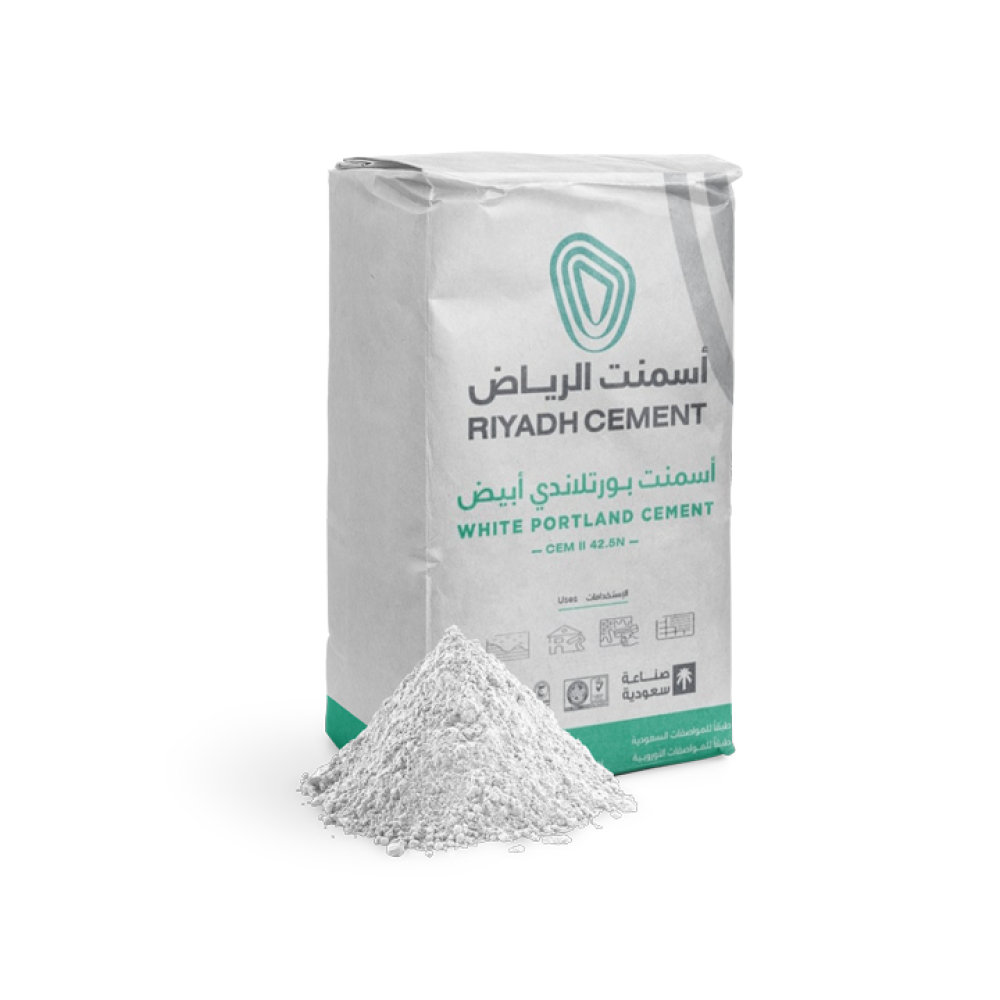
1. Components of white cement
White cement is made from the same main components used in gray cement, but in different proportions to ensure its purity and white color. The main components include:
- Pure limestone: one of the essential components in producing white cement, and it must be free of impurities such as iron and magnesium that affect the color.
- Silica clay: carefully selected to ensure a pure white color.
- Low iron content: the iron concentration is low compared to gray cement, which helps avoid negative effects on the color.
- Calcium aluminate: one of the components used in the bonding process, and its presence affects the quality of the white cement and its setting time.
2. How white cement is produced
White cement is produced using the same basic processes as ordinary cement, but with precise control over the proportions of the components. The process goes as follows:
- Preparation: raw materials such as limestone, clay, and other minerals are gathered and then finely ground.
- Firing: these components are heated in rotary kilns at high temperatures ranging between 1400-1600 degrees Celsius. In this process, the components turn into small lumps known as clinker.
- Grinding: after the clinker cools, it is finely ground to obtain the desired white cement. Materials such as gypsum may be added to control the setting time.
3. Properties of white cement
White cement has a number of properties that make it stand out from gray cement, such as:
- Pure white color: considered one of the most prominent properties that give it special appeal in architectural applications.
- Hardness and durability: like gray cement, white cement provides high load-bearing strength for buildings and structures.
- Resistance to chemical effects: it can resist various weather and chemical factors, making it ideal for use in high-humidity areas or harsh environments.
- Smoothness: it is distinguished by a smoother surface compared to gray cement, which helps achieve smoother, more beautiful surfaces in architectural applications.
4. Uses of white cement
It is used in many applications, which include:
- Luxury architectural designs: due to its beautiful white color, it is used in building facades, covering bright surfaces, as well as the exterior cladding of luxury buildings.
- Interior finishes: used in the interior finishes of homes, hotels, and commercial buildings, where it adds a touch of luxury and elegance.
- Art and sculpture: white cement is ideal for use in artwork and sculpture, as it has a pure color and a smooth surface that can be easily shaped.
- Reinforced concrete: it is also used in reinforced concrete containing colored or decorative additives, giving it a distinctive appearance.
5. Advantages of white cement
- Beauty and elegance: considered one of the most ideal materials for luxury architectural projects due to its natural beauty that adds visual value to any design.
- Durability: white cement shows excellent hardness and is able to resist harsh environmental conditions, ensuring the longevity of structures.
- Flexibility of use: it can be used in a variety of applications, whether interior or exterior, making it a versatile choice.
6. Challenges associated with white cement
Despite its many advantages, there are some challenges users may face:
- High price: white cement is usually more expensive than gray cement, due to the more complex processes involved in manufacturing it.
- Sensitivity to moisture: since white cement reacts more strongly with organic and moist materials, it may need extra care during storage and application.
7. Alternatives and future developments
With technological advances in the construction industry, researchers are working on developing new types of white cement that are more cost-effective and better at resisting weather factors. For example, there is a type of white cement that contains environmentally friendly components that are less harmful to the environment.
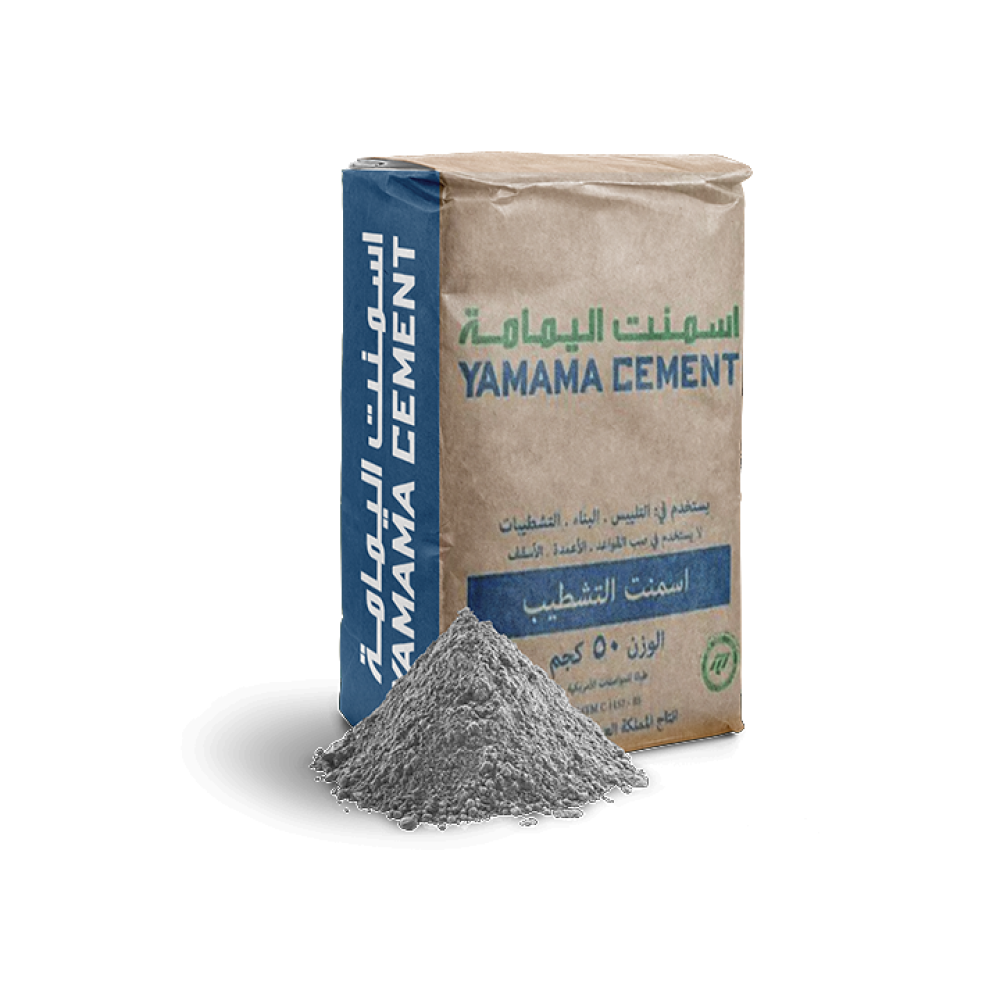
Your ideal choice for finishing work is Yamama Saudi Cement from Almabsat! An ordinary Portland cement that hardens quickly as soon as water is added, making it the ideal choice for construction and finishing projects that require speed and high quality. Yamama cement is distinguished by its excellent quality and its ability to provide a strong, lasting foundation, ensuring outstanding, sustainable results with full professionalism. Get it now and start developing your projects with the highest levels of quality and reliability.
In the end, after learning the answer to the question "What is white cement?", we discover that it is not just an ordinary building material, but a symbol of beauty and strength in the world of architecture. Its many uses and unique features make it the ideal choice for anyone seeking to add a touch of elegance and distinction to their projects. So whatever your architectural dream, white cement is the perfect starting point for achieving it.
To buy high-quality white cement:
[[almabsat.com]]
General Disclaimer:
The information provided in this article is intended for general awareness purposes, aimed at helping readers better understand construction materials, procurement processes, and make more informed decisions. While Almabsat takes care in preparing and reviewing this content, every project is unique, and technical specifications, quantities, prices, execution methods, regulations, and manufacturer instructions may vary.
Therefore, this content should not be considered a substitute for engineering, technical, or professional consultation. It is recommended to consult engineers, consultants, and relevant authorities, and to review technical specifications and manufacturer instructions before making any design, execution, or purchasing decisions.
If this article includes any prices or price indicators, they are for guidance purposes only and may vary depending on the city, quantity, brand, purchase date, and market conditions.
If you need assistance with quantity estimation, BOQ review, or obtaining a quotation, the Almabsat team will be happy to assist you.