 Almabsat
 العربية
 English
 中文
中文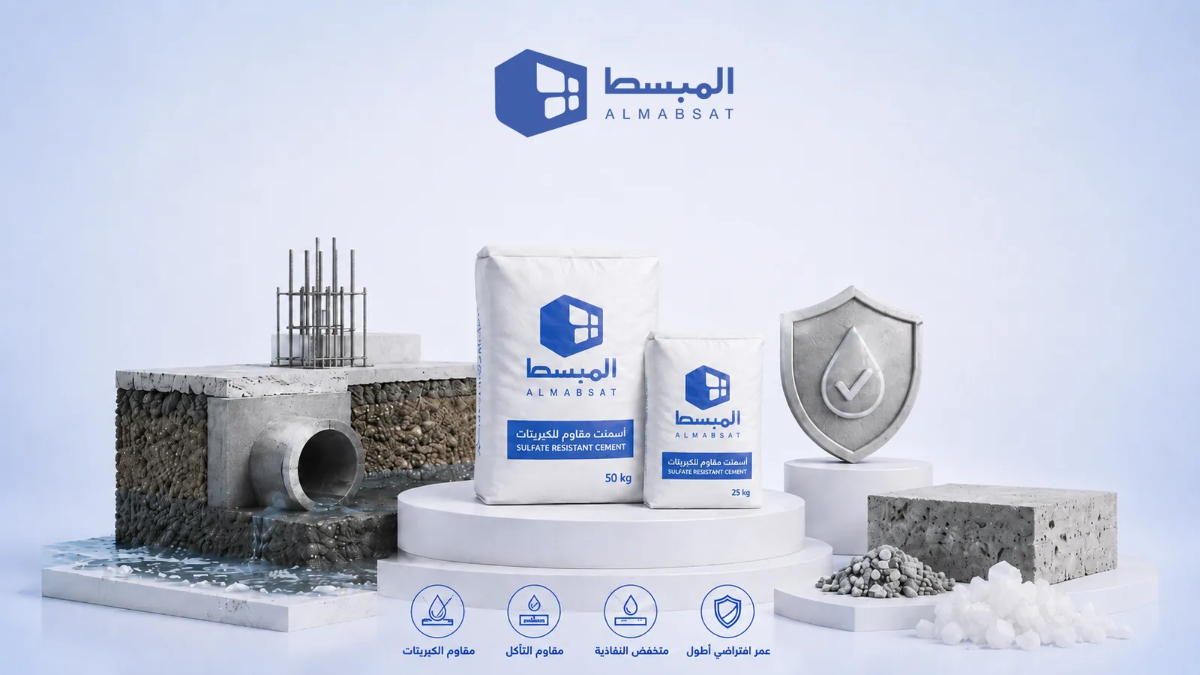
In construction, where buildings and structures face harsh environmental challenges, sulfate-resistant cement stands out as the ideal solution for delivering long-lasting protection and strength. With more projects being built in coastal environments or areas with saline soils, the uses of sulfate-resistant cement have become essential for avoiding erosion and keeping structures stable for years. This type of cement isn't just an ordinary building material — it's an engineering shield that protects the foundations of buildings, bridges, tunnels, and even marine structures from the toughest environmental threats.
Uses of Sulfate-Resistant Cement
The uses of sulfate-resistant cement are among the most important innovations in modern construction, offering superior protection for buildings and structures exposed to harsh environments with high sulfate levels in soil or water. Its special chemical composition reduces the reaction between sulfates and concrete components, preventing erosion and keeping structures durable over the long term. Let's walk through its main uses in detail:
1. Marine structures and ports
Structures built in marine environments are exposed to salts and sulfates from seawater. Sulfate-resistant cement is used for:
- Building docks and ports.
- Barriers holding back saline water.
- Marine foundations that need to resist salt.
This use protects structures from rapid deterioration and extends their service life.
2. Areas with saline soils
Saline soils contain high sulfate levels that can erode regular concrete. Sulfate-resistant cement is used for:
- Building foundations and infrastructure in desert regions or near coastlines.
- Building roads and bridges that cross sulfate-rich soils.
3. Industrial facilities
In many industries, facilities are exposed to harsh chemicals including sulfates. Here, sulfate-resistant cement plays a key role in:
- Building factories that work with chemicals, such as fertilizer plants.
- Building water and wastewater treatment plants.
- Building industrial chimneys exposed to aggressive chemicals.
4. Major infrastructure projects
In major infrastructure projects — bridges, tunnels, dams — durability and sustainability are top priorities. This cement is used in such projects to ensure:
- Reduced erosion from sulfates in the soil or groundwater.
- Protection of tunnel structures passing through harsh soils.
5. Agricultural facilities
Agricultural facilities are continuously exposed to sulfates in soil and fertilizers. Sulfate-resistant cement is used for:
- Building irrigation canals and small dams.
- Building fertilizer storage warehouses.
6. Reservoirs and water-storage stations
Because reservoirs and water-storage stations are exposed to water containing sulfates, using sulfate-resistant cement ensures:
- Prevention of internal wall erosion.
- Protection of the reservoir infrastructure and no water leakage.
7. Building in desert environments
In desert regions, the dry soil contains high sulfate levels, making sulfate-resistant cement essential for:
- Building homes and local infrastructure.
- Building solar power stations and sustainable energy facilities.
8. Underground structures
Underground projects like tunnels and metro systems are exposed to groundwater that may contain sulfates. Sulfate-resistant cement is used to ensure:
- Reduced erosion impact from sulfates.
- Improved durability and rigidity for the underground structure.
9. Wetlands and marshes
Wetlands with sulfate-rich water need special care when building. Sulfate-resistant cement plays an important role in:
- Building roads and bridges crossing marshes.
- Building structures that need to remain stable in these environments.
10. Industrial zones with high chemical activity
In industrial zones where chemical processes produce sulfates, this cement is used for:
- Building support structures for factories.
- Building industrial platforms and docks.
The uses of sulfate-resistant cement make it indispensable in modern construction, especially in harsh environments. It provides the protection needed against erosion and ensures long structural life, making it the first choice for engineers and contractors looking for sustainable, effective solutions.
In the end, sulfate-resistant cement represents a major step forward in modern construction, where protecting structures and ensuring their durability has become a top priority in the face of tough environmental challenges. Whether you're planning a project in a marine setting, in areas with saline soils, or in industrial facilities exposed to chemicals, this type of cement gives you the ideal solution for quality that lasts for decades. It's the choice that combines technology and innovation to be the cornerstone of any engineering project that aims for excellence and sustainability.
To buy sulfate-resistant cement:
[[almabsat.com]]
General Disclaimer:
The information provided in this article is intended for general awareness purposes, aimed at helping readers better understand construction materials, procurement processes, and make more informed decisions. While Almabsat takes care in preparing and reviewing this content, every project is unique, and technical specifications, quantities, prices, execution methods, regulations, and manufacturer instructions may vary.
Therefore, this content should not be considered a substitute for engineering, technical, or professional consultation. It is recommended to consult engineers, consultants, and relevant authorities, and to review technical specifications and manufacturer instructions before making any design, execution, or purchasing decisions.
If this article includes any prices or price indicators, they are for guidance purposes only and may vary depending on the city, quantity, brand, purchase date, and market conditions.
If you need assistance with quantity estimation, BOQ review, or obtaining a quotation, the Almabsat team will be happy to assist you.