 Almabsat
 العربية
 English
 中文
中文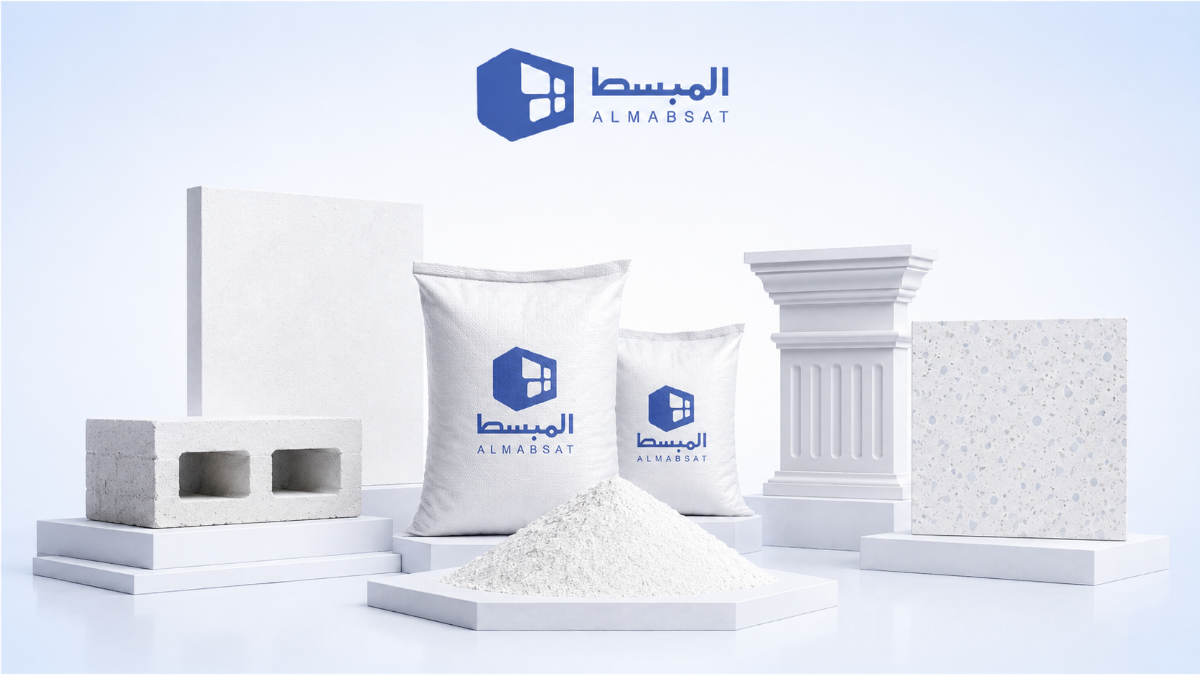
When we talk about the types of finishing cement, we're talking about the final touch that gives your projects strength and beauty at the same time! Whether you're building your home down to the finest detail or working on a massive project that demands high durability, choosing the right cement is the key to success. Each type has its own unique advantages that guarantee exceptional performance in finishing work — from ultra-smoothness to hardness that lasts for decades. Discover with us the perfect options that take build quality to a new level.
Discover the ideal types of finishing cement
When carrying out the final finishes of any building, cement plays a key role in determining the quality and durability of the work. It's not just an adhesive material that binds elements together; it's the essential factor that ensures walls and surfaces will be strong, smooth, and durable over the long term. But with the variety of finishing cement types, how do you choose the most suitable one for your project? Let's get to know the different types and the characteristics of each.
What is finishing cement and why is it different from ordinary cement?
Finishing cement is a special type of cement used to finish the interior and exterior surfaces of buildings. It's distinguished by its fine composition, which gives it a high ability to adhere — making it ideal for plastering, rendering, tile installation, and decorative work. It differs from the cement used in structural construction, as it focuses on achieving surface smoothness and stability of the final finish rather than bearing heavy loads.
Types of finishing cement and the characteristics of each
1. Ordinary Portland cement – the versatile traditional choice
Ordinary Portland cement is one of the most common types in finishing work, distinguished by its fast setting and its ability to achieve a durable surface suitable for various applications.
Where is it used?
- Interior and exterior plastering
- Tile and ceramic installation
- Gypsum ceiling work
- Basic concrete coatings
Its advantages:
- Available at an economical price
- Easy to use and provides strong cohesion
- Suitable for a wide range of finishing work
Its drawbacks:
- May be prone to cracking if not used correctly
- Needs good water curing to prevent rapid drying
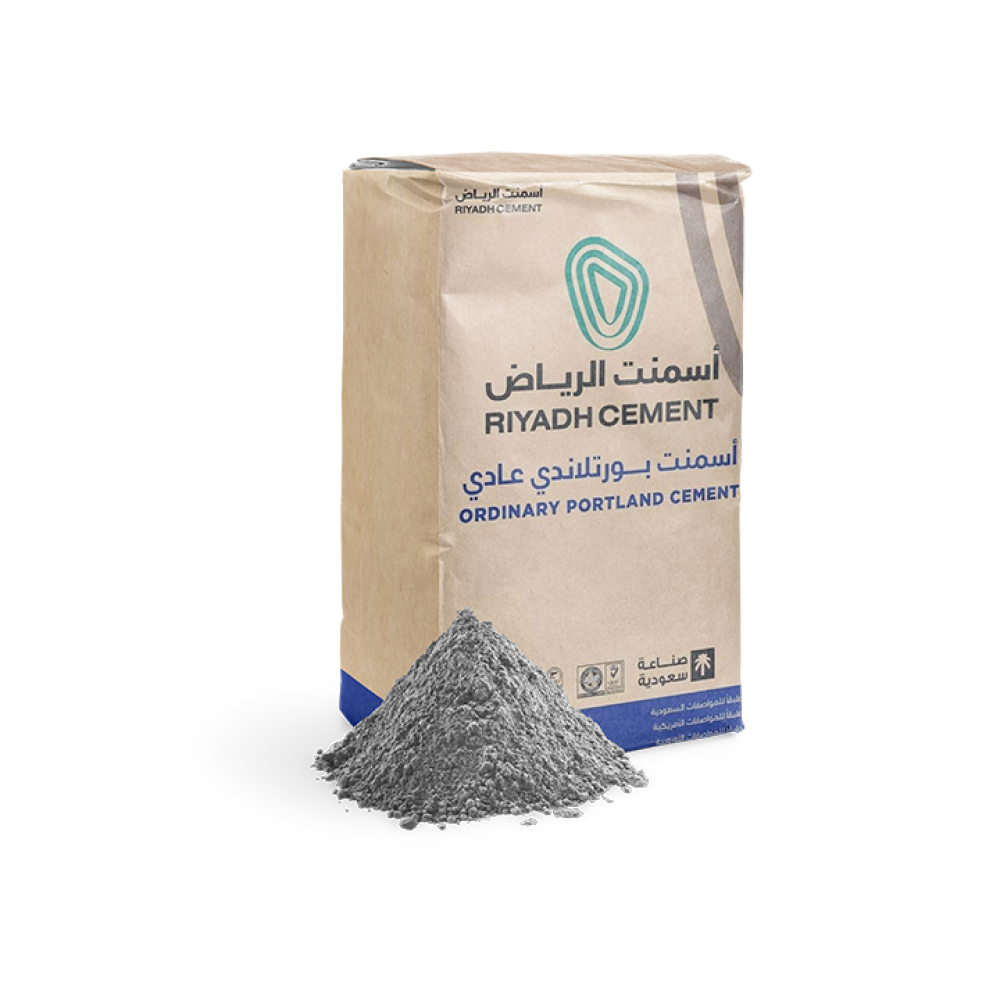
Build your projects on lasting durability with Riyadh Ordinary Cement from Almabsat — the ideal choice for ready-mix concrete, foundations and footings, and brick and tile manufacturing. Exceptional strength and high quality guarantee you a solid build that lasts for years!
2. White cement – aesthetic and creative touches
If you're looking for an elegant aesthetic touch, white cement is the ideal choice, giving you a smooth finish in a bright color that suits modern decor.
Where is it used?
- Interior and exterior decor
- Gypsum decorative work
- Decorative tiles and artificial stone
- White concrete coatings
Its advantages:
- Provides a pure, aesthetic appearance
- Features high adhesion strength with colors and paints
- Ideal for spaces that need a luxurious finish
Its drawbacks:
- Its price is higher than ordinary cement
- Requires precision during work to avoid unwanted stains
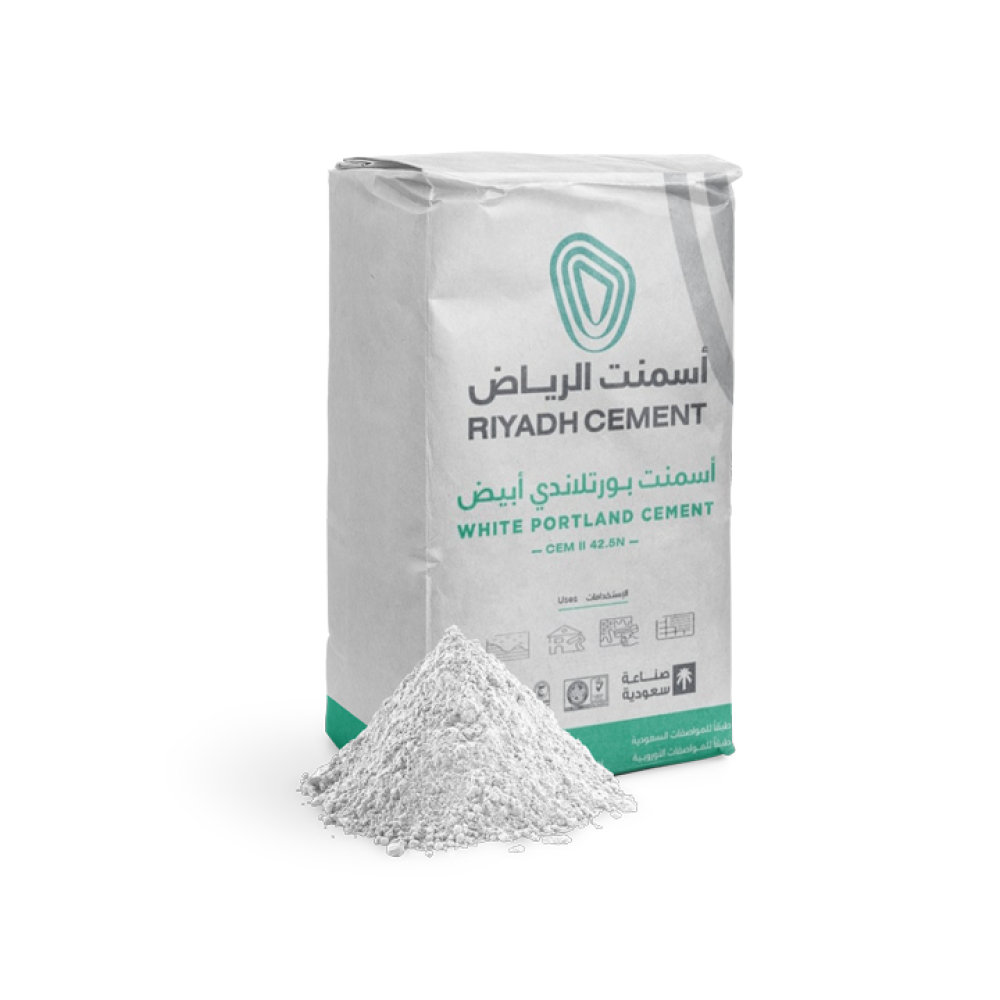
Take your finishes to a new level with Riyadh White Cement from Almabsat — the optimal choice for solid ready-mix concrete, durable foundations and footings, and high-quality precast structures. It gives you refined beauty and lasting strength, making the foundation of your projects more brilliant and stable. Order it now.
3. Sulfate-resistant cement – strength in the face of environmental challenges
When working in environments with soil or water rich in sulfates, sulfate-resistant cement is the best choice, as it's specifically designed to resist harmful chemical effects.
Where is it used?
- Coastal areas where there is a high proportion of salts
- Buildings near saline groundwater
- Plastering work in places exposed to high humidity
Its advantages:
- Prevents corrosion and cracking of surfaces caused by sulfates
- Increases the lifespan of buildings in humid environments
- Ideal for foundations and exterior finishes
Its drawbacks:
- Not necessary in dry places, making it an uneconomical choice in some cases
- Its price is higher compared to traditional cement
4. Rapid-hardening cement – the optimal solution for fast projects
When you have limited time to complete finishing work, rapid-hardening cement is the optimal choice, as it allows the job to be done quickly without compromising on quality.
Where is it used?
- Projects that require fast execution, such as shops and offices
- Tile installation in high-traffic areas
- Work that needs formwork to be removed quickly
Its advantages:
- Speeds up the pace of work and reduces execution time
- Allows tiles and finishes to be installed quickly
- Suitable for projects with tight timelines
Its drawbacks:
- May be more prone to cracking if its curing is not well controlled
- Less durable in the long term compared to other types
5. Low-heat cement – ideal for hot regions
In regions with a hot climate, high temperatures can cause cracks on surfaces, so low-heat cement is an effective solution for reducing thermal expansion as it sets.
Where is it used?
- Finishes in hot regions
- Mass concrete work that needs to reduce thermal impact
Its advantages:
- Reduces the risk of cracks caused by high heat
- Improves the quality of the final surface in hot climates
Its drawbacks:
- Its cost is higher than traditional cement
- Needs special care during mixing and application
How do you choose the right type of finishing cement?
Choosing the right type of cement depends on several factors, including:
Work environment: In coastal areas, sulfate-resistant cement is preferred, while in hot places, low-heat cement is the optimal solution.
The type of finish required: If you're looking for an aesthetic touch, white cement is the best choice; but for traditional finishes, you can rely on ordinary Portland cement.
The time available for execution: In projects that need fast execution, rapid-hardening cement is the most suitable.
Cost and budget: Cement prices vary, so it's best to choose the type that strikes a balance between quality and cost.
Cement is a crucial element in the success of finishing work, and choosing the right type can significantly affect the strength and durability of the building. Whether you're looking for cement that provides an aesthetic finish, or your project needs a type resistant to environmental conditions, knowing the characteristics of each type helps you make the right decision.
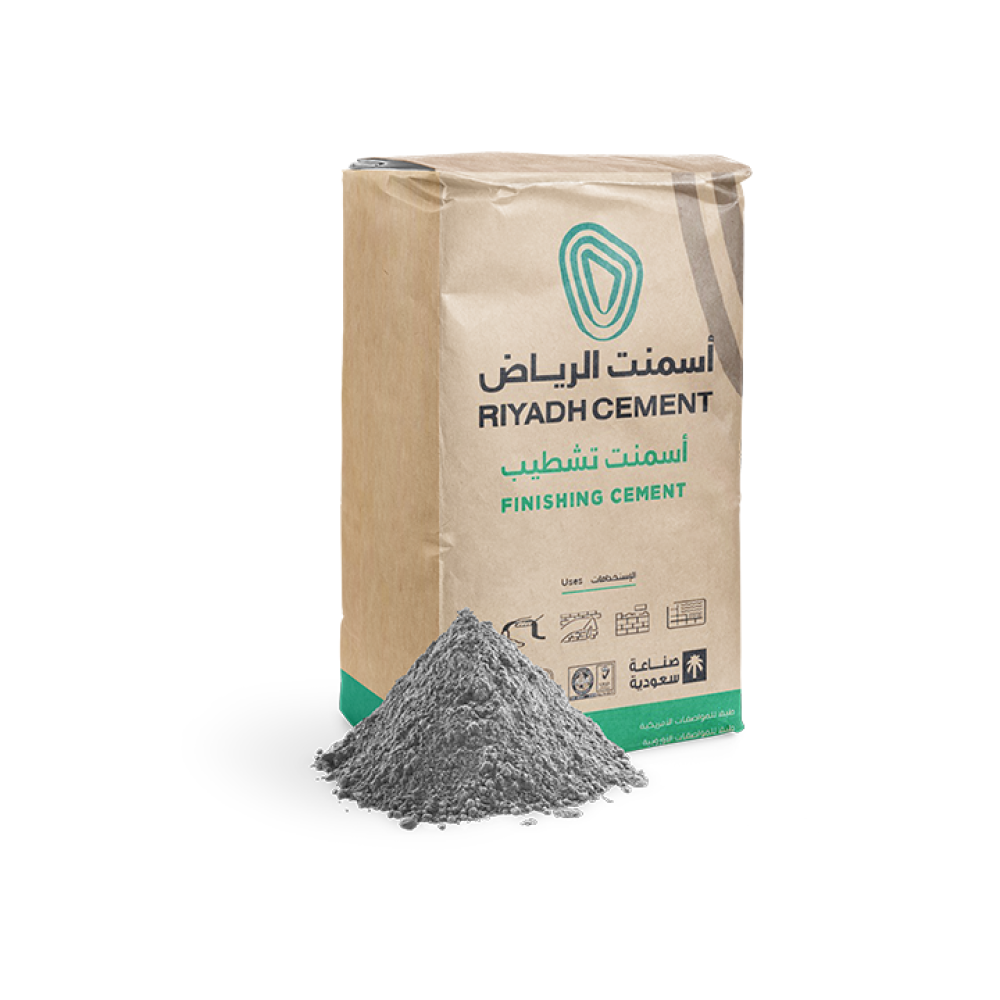
To finish your projects with a masterful touch, choose Riyadh Finishing Cement from Almabsat — the ideal choice for construction work, giving you smooth surfaces and strong cohesion before tiling, with a durable composition that ensures lasting quality.
In the end, choosing the right types of finishing cement is what determines how masterful your final touches are in your project, turning every corner into part of a sustainable work of art. From strength to beauty, these types harmonize to give you the best results that last a long time. So don't let the small details slip by — choose carefully and give your project the final touch it deserves!
To buy the different types of finishing cement
[[almabsat.com]]
General Disclaimer:
The information provided in this article is intended for general awareness purposes, aimed at helping readers better understand construction materials, procurement processes, and make more informed decisions. While Almabsat takes care in preparing and reviewing this content, every project is unique, and technical specifications, quantities, prices, execution methods, regulations, and manufacturer instructions may vary.
Therefore, this content should not be considered a substitute for engineering, technical, or professional consultation. It is recommended to consult engineers, consultants, and relevant authorities, and to review technical specifications and manufacturer instructions before making any design, execution, or purchasing decisions.
If this article includes any prices or price indicators, they are for guidance purposes only and may vary depending on the city, quantity, brand, purchase date, and market conditions.
If you need assistance with quantity estimation, BOQ review, or obtaining a quotation, the Almabsat team will be happy to assist you.