 Almabsat
 العربية
 English
 中文
中文
The success of any residential project depends on the quality of the materials used and how reliably they're supplied, and cement is at the top of that list as the foundation of most construction work. Choosing a reliable cement supplier in Saudi Arabia doesn't just guarantee a high-quality product — it also helps avoid delays and keeps the project running to plan. In this article, we cover the most important criteria that answer the question of how to choose a cement supplier in Saudi Arabia for residential projects.
How to Choose a Cement Supplier in Saudi Arabia for Residential Projects?
Successful cement supply doesn't just depend on the product being available — it depends on the supplier's ability to meet the project's needs continuously and in an organized way throughout the execution stages. That's why comparing suppliers against clear criteria helps avoid delays and guarantees you get suitable materials of consistent quality.
- Confirm the supplier's reliability and market experience: it's best to work with a supplier who has a good track record supplying building materials for residential projects and stands out for commitment and quality in dealings.
- Check the quality of the cement available: make sure the cement supplied meets approved specifications and standards, to guarantee the safety of the construction work and execution quality.
- A range of available cement types: a good supplier offers multiple options such as ordinary Portland cement, finishing cement, and sulfate-resistant cement, suited to different construction stages.
- Sticking to delivery schedules: late cement deliveries can affect the project's timeline, so it's important to choose a supplier known for fast supply and adherence to schedules.
- Balanced price comparison: you shouldn't rely on the lowest price alone — you need to weigh cost against product quality and the services provided.
- The ability to supply the required quantities: it's essential to confirm the supplier can meet the project's needs, whether small quantities or large, repeat orders.
- Availability of support and follow-up services: a professional supplier helps clients choose the right products and provides continuous follow-up on supply orders.
- Checking customer reviews and track record: reviewing past customers' experiences gives a clearer picture of the level of service and product quality the supplier provides.
- Ease of ordering and communication: the easier and clearer the ordering process, the more time it saves and the fewer problems arise during project execution.
- Choosing a supplier that offers complete solutions: it's best to work with a party that supplies cement alongside other building materials, which makes managing purchasing and coordinating supply for the project easier.
How Do You Compare Cement Supplier Prices?
Relying on the advertised price alone isn't enough when comparing cement suppliers, since the real cost can be affected by other factors such as transport, delivery speed, and product quality. A proper comparison should be based on the total value the project receives, not just the price.
- Request price quotes from several suppliers: it's best to get written quotes from at least 3 to 5 suppliers, including details on prices, quantities, and supply terms, to make an accurate comparison between different offers easier.
- Compare the unit price, not just the total price: make sure you know the price per bag or ton of cement from each supplier, since some offers may look cheaper overall due to differences in quantity or specification.
- Calculate transport and unloading costs: the supplier with the lower base price may end up costing more once transport or unloading fees are added, so it's important to factor in all supply-related expenses.
- Check cement quality and spec compliance: don't make price the only factor in your decision — choosing cement that meets approved specifications helps preserve project quality and reduce future problems.
- Compare supply time and adherence to schedules: delays in cement arrival can cause work stoppages and higher operating costs, so supply speed should be part of your comparison criteria.
- Review available payment terms: some suppliers offer more flexible payment options, which is important, especially on projects that rely on multiple funding phases.
- Assess the ability to supply required quantities: it's important to confirm the supplier can meet the project's current and future needs without interruption in supply.
- Build a comprehensive comparison table: put all offers into a table covering price, transport cost, supply time, payment terms, and quality, to determine the best actual value for the project.
- Look for value, not just the lowest price: a supplier offering higher quality and better commitment may be more cost-effective in the long run, even if their price is slightly higher than competitors.
Common Mistakes When Choosing a Cement Supplier
Choosing a cement supplier is a fundamental step in the success of any construction project, and any mistake in it can lead to execution delays or weaker material quality. Avoiding common mistakes helps guarantee stable supply and high quality suited to residential project needs.
- Relying on the cheapest price alone: focusing on price without considering quality or reliability can lead to problems later in execution or supply.
- Not checking cement quality: neglecting to confirm specifications and certificates can lead to using unsuitable materials that affect construction strength.
- Choosing an unreliable supplier: dealing with unknown parties or those without a clear track record increases the risk of delays or poor service.
- Neglecting delivery schedules: not confirming the supplier's commitment to schedules can lead to work stoppages within the project.
- Not comparing offers comprehensively: relying on price alone without considering transport costs or other terms leads to an inaccurate decision.
- Not confirming available quantities: some suppliers can't consistently cover the needs of large projects.
Best Cement Types Used in Saudi Construction from Almabsat
Almabsat offers a varied range of the best cement types used in Saudi construction, meeting the needs of contractors and project owners in terms of quality, consistency, and ease of supply, whether for foundation work, concrete, or finishing.
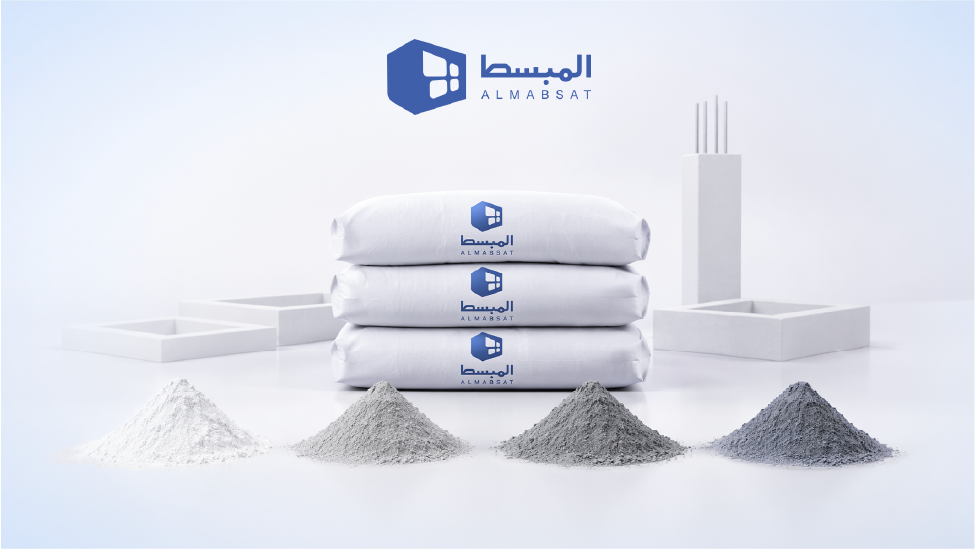
These types include ordinary Portland cement used in general construction work and pouring concrete, and finishing cement suited to plastering work and achieving smooth surfaces, in addition to white cement used in aesthetic work, finishing, and decoration.
Almabsat also supplies sulfate-resistant cement, engineered to withstand harsh environmental conditions such as saline soil and high moisture. Other specialized types can also be supplied depending on demand and availability, such as cement used in well construction and other specialty grades.
Almabsat's range includes a selection of trusted brands in the Saudi market, such as Yamama Cement, Riyadh Cement, Qassim Cement, Madinah Cement, Najran Cement, and Bahraini Cement, guaranteeing product quality and fast supply to efficiently meet project needs.
Frequently Asked Questions about How to Choose a Cement Supplier in Saudi Arabia for Residential Projects
Is price the main factor in choosing a supplier?
No, price matters but shouldn't be the only factor — quality, transport costs, and the supplier's reliability should also be considered.
How can I confirm cement quality from a supplier?
By confirming the product meets approved specifications, requesting quality data or certificates if available, and working with a reliable supplier.
Does a variety of cement types matter for a supplier?
Yes, since every stage of construction needs a different type, such as ordinary, finishing, or sulfate-resistant cement.
In closing, we've covered how to choose a cement supplier in Saudi Arabia for residential projects, and the importance of relying on clear criteria that guarantee material quality and consistent supply, contributing to the project's success without disruption to execution stages.
You may also like:
- Concrete Problems and Their Solutions: a complete guide to a strong, lasting build
- Uses of Finishing Cement in Home Décor
- Types of Concrete in Saudi Arabia for Your Construction Projects
General Disclaimer:
The information provided in this article is intended for general awareness purposes, aimed at helping readers better understand construction materials, procurement processes, and make more informed decisions. While Almabsat takes care in preparing and reviewing this content, every project is unique, and technical specifications, quantities, prices, execution methods, regulations, and manufacturer instructions may vary.
Therefore, this content should not be considered a substitute for engineering, technical, or professional consultation. It is recommended to consult engineers, consultants, and relevant authorities, and to review technical specifications and manufacturer instructions before making any design, execution, or purchasing decisions.
If this article includes any prices or price indicators, they are for guidance purposes only and may vary depending on the city, quantity, brand, purchase date, and market conditions.
If you need assistance with quantity estimation, BOQ review, or obtaining a quotation, the Almabsat team will be happy to assist you.