 Almabsat
 العربية
 English
 中文
中文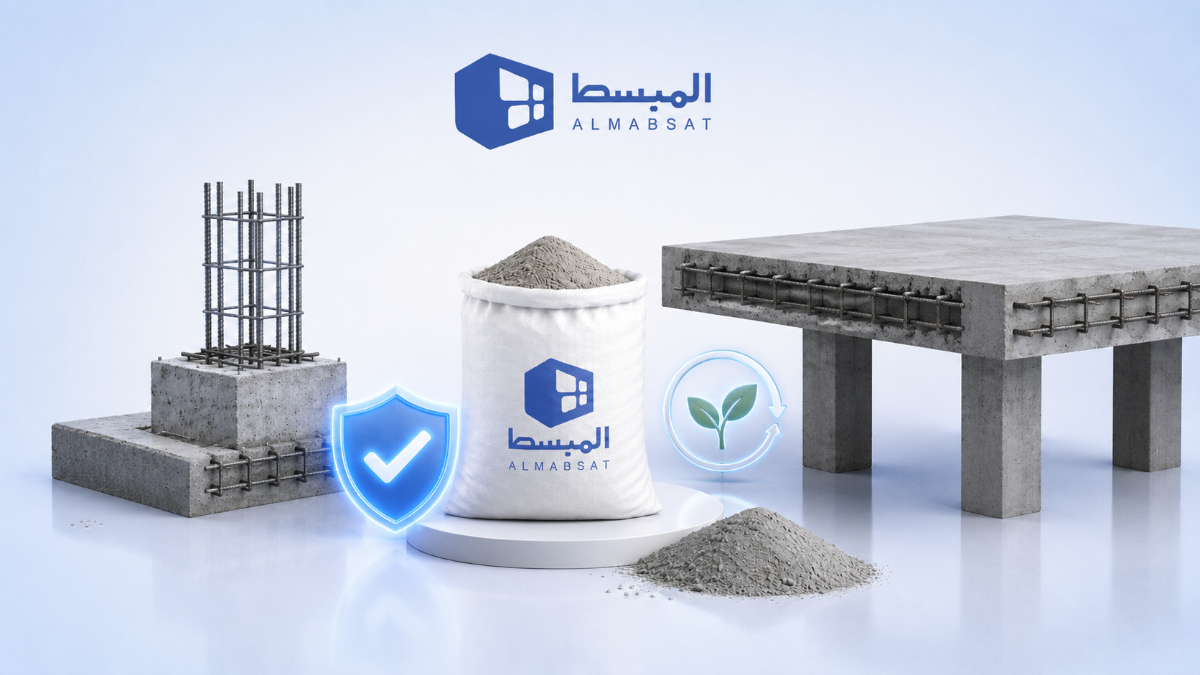
When constructing any structure, choosing the type of cement is one of the most important decisions, directly affecting the building's durability and longevity. While many people focus on other details, some overlook how important it is to know which type of cement is used in foundations and which is used in the roof.
Do you know the difference between them? And how does each type affect the building's long-term stability? We'll take you on a tour to learn about the best types and how to choose the most suitable one to ensure the strength and durability of the build under various conditions.
Everything you need to know about the cement used in foundations and the cement used in the roof
Cement plays a vital role in ensuring a building's stability and strength. But with the many types of cement available on the market, their uses vary according to the requirements of each part of the building. Among the most important of these parts are the foundations and the roof, each of which requires a special type of cement to ensure optimal performance. Below is an in-depth look at the type of cement used in foundations and the type used in the roof.
1. Type of cement used in foundations
The foundations are the part that carries the weight of the entire building, and they must be strong enough to withstand the challenges they may face, such as heavy loads, environmental changes, and high humidity. For this reason, the type of cement is chosen carefully to ensure durability and a long lifespan.
- Ordinary Portland Cement (OPC): the most common type used in building foundations. It's known for its high strength and quick setting, making it suitable for foundations that require strong support and high load-bearing capacity.
- Sulfate Resistant Cement: used in soils that contain high percentages of sulfates, where these sulfates may cause ordinary cement to deteriorate over time. This type of cement provides additional protection against the chemical reactions that may occur in sulfate-rich soils.
- Waterproof Cement: in areas with a high groundwater level or in foundations submerged in water, waterproof cement is preferred. This type contains additives that prevent it from absorbing moisture, protecting the foundations from corrosion or collapse over time.
- Pozzolanic Cement: natural materials such as volcanic ash or clay are added to ordinary cement to improve its resistance to harsh conditions, such as clay soils that may contain salts.
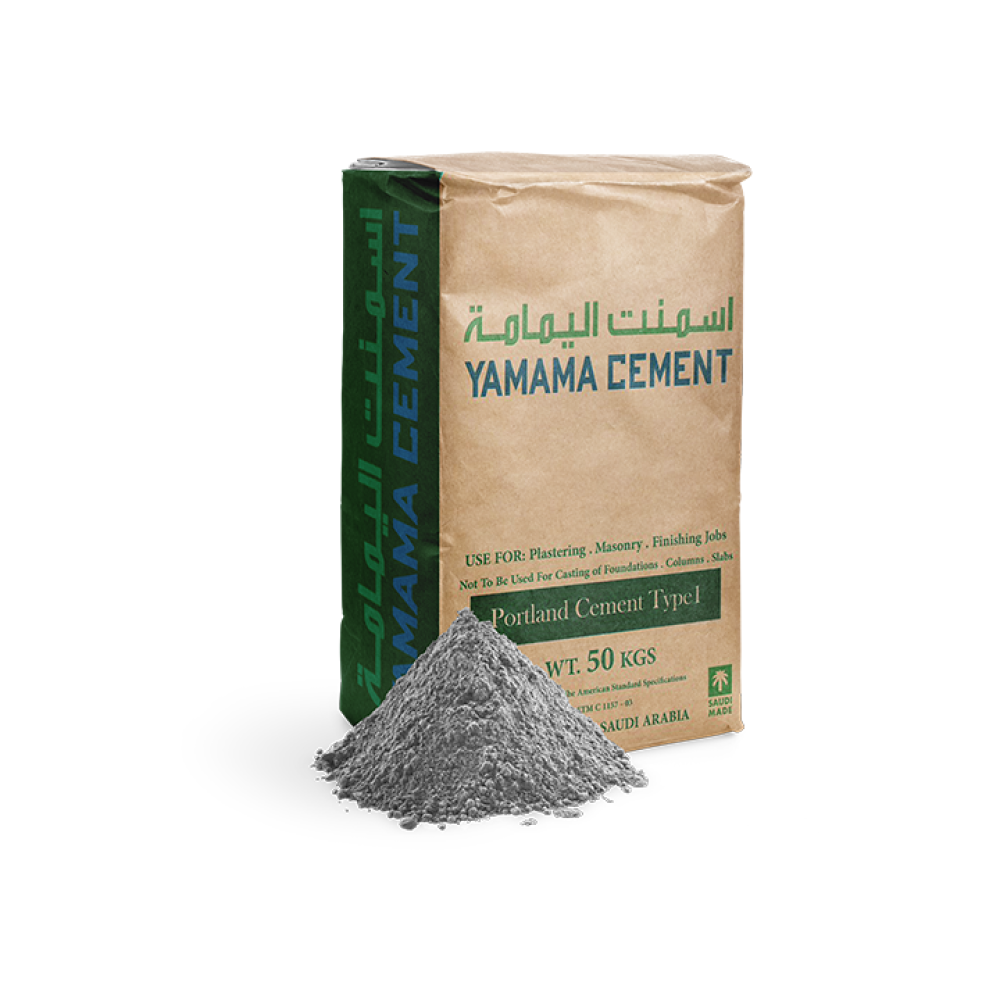
Get Yamama Cement - Ordinary from Almabsat now, the ideal choice for all building and construction work! This cement guarantees high load-bearing capacity in concrete pouring, whether for foundations or concrete structures, while providing maximum durability and hardness for buildings. Choose Yamama Cement from Almabsat and be confident that you're choosing quality that lasts and meets your needs with full efficiency.
2. Type of cement used in the roof
The roof is the part exposed to major environmental changes such as heat and humidity, so the cement used in building the roof must be strong and able to withstand changing weather conditions. Here are some of the types that can be used in the roof:
- Ordinary Portland Cement (OPC): widely used in concrete surfaces and roofs because of its strength in withstanding pressure and climatic changes. This type of cement is considered ideal in areas that don't suffer from severe humidity or harsh environmental conditions.
- Heat-resistant Cement: if the roof is exposed to direct sunlight for long periods or in areas with high temperatures, heat-resistant cement can be used. It improves the roof's ability to resist high heat and cracking.
- Lightweight Cement: used in surfaces that need less weight, such as surfaces containing thermal insulation or those that require lower load-bearing capacity. This type helps reduce the weight of the roof without affecting its structural strength.
- Blended Portland Cement: this type is combined with additional materials to improve its properties, such as resistance to cracking and more effective heat distribution. It may contain fly ash or slaked lime to improve its flexibility and cohesion with the other materials in the roof.
Factors affecting the choice of cement used in foundations and in the roof
- Climatic conditions: in areas that experience extreme heat or heavy rainfall, cement types resistant to environmental effects such as heat or humidity must be chosen.
- Soil type: the soil affects the choice of suitable cement. If the soil is rich in salinity or sulfates, cement resistant to these materials will be the better choice.
- Expected pressure: the foundations carry the entire weight of the building, so a strong cement that withstands high pressures must be used, while the roof bears relatively less pressure but needs the ability to withstand heat and water.
- Budget: many types of cement are available at varying prices. Choosing the most suitable type requires a balance between performance and the available budget.
- Time: in some projects, fast-drying cement (such as rapid-hardening cement) may be required to speed up operations, while in some other cases, cement that needs a longer time to harden can be used to give more durable results.
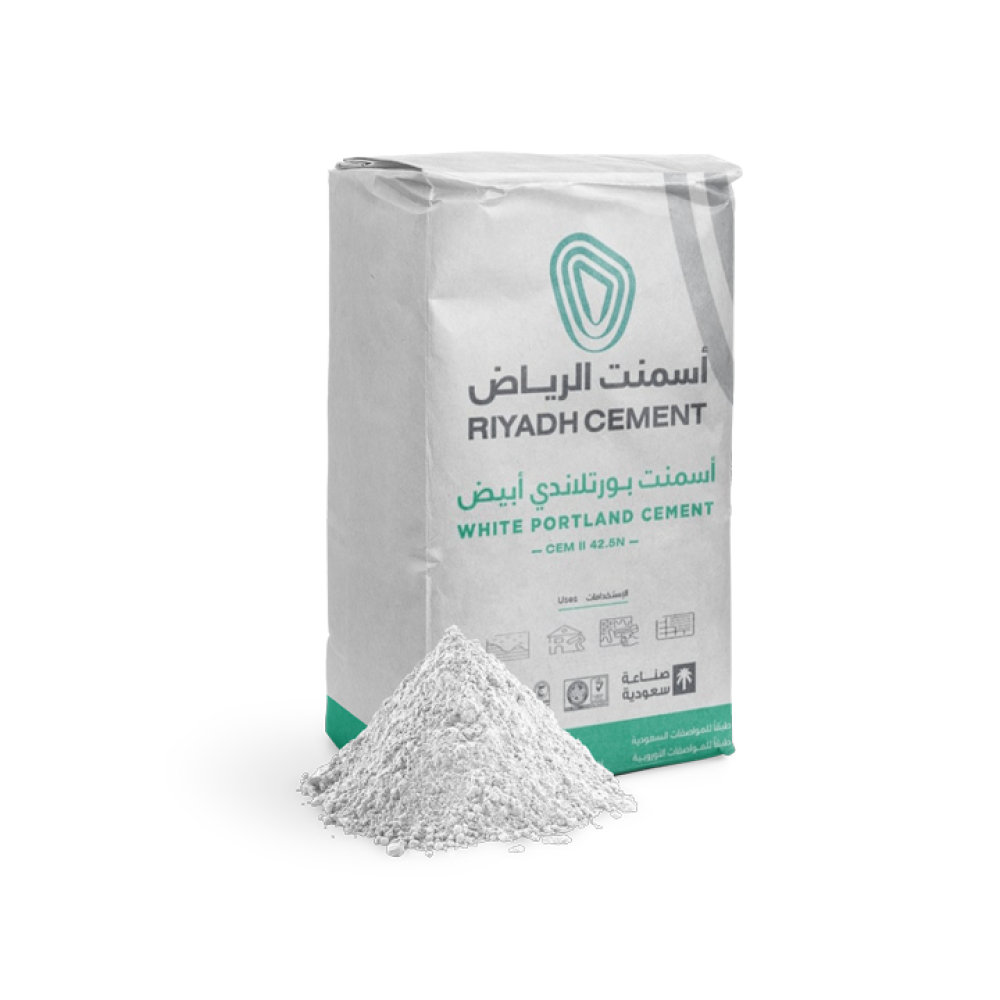
Riyadh Cement - White from Almabsat is the ideal choice for all your construction projects. It's used in a wide range of applications, including ready-mix concrete that delivers unmatched strength and hardness, bases and foundations that ensure the stability of buildings for long periods, the manufacture of concrete pipes that withstand high pressures, precast concrete structures that boast efficiency and quality, and also in the manufacture of bricks and tiles that enhance a project's aesthetics and ensure durability in finishes. With Riyadh Cement - White, you get guarantees of quality and high performance for your projects at every step.
Choosing the type of cement used in foundations and in the roof is one of the essential decisions that greatly affect the strength and sustainability of the building. It's important that the type of cement matches the environmental conditions of the site and the needs of the project. By understanding the properties of each type of cement and using it in the right place, you can achieve the best results in terms of strength, durability, and safety.
To buy the type of cement used in foundations and roofs
[[almabsat.com]]
General Disclaimer:
The information provided in this article is intended for general awareness purposes, aimed at helping readers better understand construction materials, procurement processes, and make more informed decisions. While Almabsat takes care in preparing and reviewing this content, every project is unique, and technical specifications, quantities, prices, execution methods, regulations, and manufacturer instructions may vary.
Therefore, this content should not be considered a substitute for engineering, technical, or professional consultation. It is recommended to consult engineers, consultants, and relevant authorities, and to review technical specifications and manufacturer instructions before making any design, execution, or purchasing decisions.
If this article includes any prices or price indicators, they are for guidance purposes only and may vary depending on the city, quantity, brand, purchase date, and market conditions.
If you need assistance with quantity estimation, BOQ review, or obtaining a quotation, the Almabsat team will be happy to assist you.