 Almabsat
 العربية
 English
 中文
中文
Cement is one of the most essential building materials that residential projects depend on, which is why knowing cement prices for residential projects matters when planning a budget and choosing the right supplier. Prices vary by cement type, required quantities, brand, and transport costs, which makes comparing options and picking a reliable source a necessary step to protect material quality and control project costs.
Cement Prices for Residential Projects
Cement prices for residential projects are shaped by several factors tied to production costs, market movement, and the specific needs of the project. Understanding these factors helps contractors and project owners plan their budget and choose the right time and supplier to buy cement.
- Production and energy costs: the cost of running cement plants and the price of the energy used in manufacturing directly affect the final price of the product.
- Cement type and brand: prices vary by cement type, specification, and manufacturer, since some projects need special types with specific requirements.
- Market demand: rising demand for cement as construction activity increases shifts prices according to market movement and available supply.
- Transport and supply costs: the distance between the supplier and the project site, along with transport costs, affects the total price the client pays.
- Purchase quantity: cement cost can vary with order size, since large projects need bigger quantities that can affect pricing and supply terms.
- Choosing the right supplier: working with a reliable supplier helps secure fair prices and supply options that meet the project's needs while guaranteeing product quality.
How to Choose the Right Cement for Your Project's Needs
Choosing the right type of cement is a key step in ensuring the quality and strength of a project's execution. Cement types vary by use and by the conditions surrounding the building, so it's important to consider the project's requirements, the type of construction work, and the environment it will be built in to pick the type that performs best.
- Define the project type and its uses: residential projects have different needs from commercial or specialized construction projects, so the cement should suit the nature of the work required.
- Pick the right type for each construction stage: ordinary cement is commonly used for general construction work, while some work may need specialized types such as sulfate-resistant or white cement depending on the use.
- Account for the site's environmental conditions: in areas exposed to moisture, salts, or sulfates, it's best to choose types that offer higher resistance to these conditions to preserve the structure's durability.
- Rely on supplier quality: choosing a reliable supplier helps you get certified cement to the right specification, with guaranteed product quality and continuous supply.
- Balance quality against cost: the choice shouldn't be based on price alone — it should balance cement cost against the project's requirements to achieve the best value and quality in execution.
Best Cement Types for Residential Projects from Almabsat
Almabsat offers a range of certified cement types from leading Saudi factories to meet the needs of residential projects and various construction work with dependable quality. The range covers types suited to different stages of execution, from core structural work through to finishing and decoration.
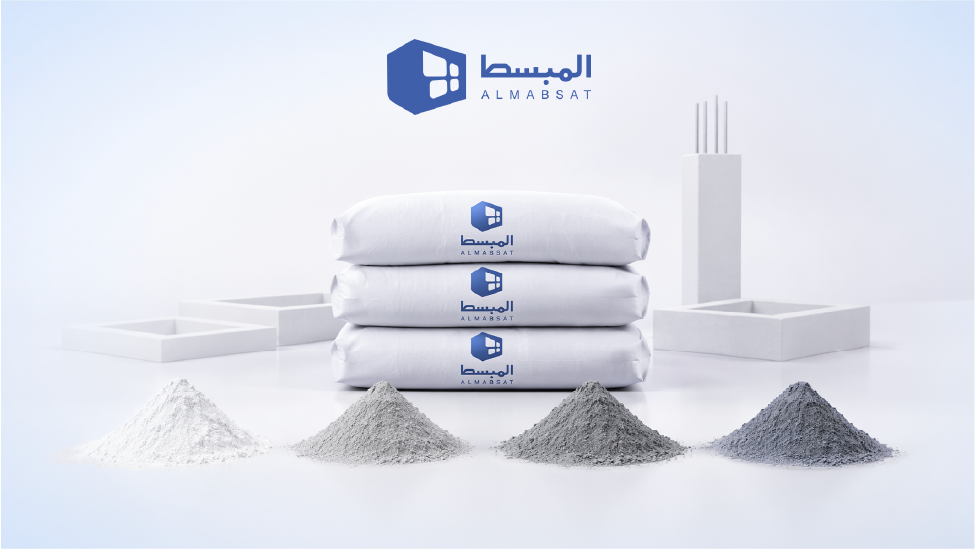
Available options include ordinary Portland cement used in most general construction work, finishing cement suited to plastering and creating smooth surfaces, and white cement used in aesthetic applications and decor work that call for a distinctive look.
Almabsat also supplies sulfate-resistant cement, engineered to withstand harsh environmental conditions and increase a structure's resistance to damaging factors, with other specialized cement types available depending on project needs and product availability, such as cement used in well construction and other specialty grades.
Contractors and project owners can learn about the available cement products by reaching out to Almabsat, with options that include Yamama Cement, Riyadh Cement, Qassim Cement, Madinah Cement, Najran Cement, and Bahraini Cement, along with supply solutions tailored to different project needs.
Why Almabsat Is a Good Choice for Cement Supply
When looking for a cement supplier for residential or commercial projects, it isn't just about getting the product — it also comes down to the range of options, delivery speed, and how easily you can get a price quote. That's what makes Almabsat a solid choice for contractors and project owners, offering flexible building-material supply solutions with a focus on simplifying purchasing and delivery.
- A wide range of cement types: from leading Saudi factories, making it easy to choose the right type for the project's requirements.
- Working with certified suppliers: to guarantee reliable products that meet the needs of different construction work.
- Fast price quotes: and order processing, helping contractors make purchasing decisions faster.
- Direct delivery to the project site: making supply easier and reducing the time and effort needed to get materials.
- Flexibility in ordering and quantities: with more than one way to send requirements and request price quotes based on project needs.
- Building materials from a single source: alongside cement, such as block, sand, and gravel, which simplifies purchasing management and supply coordination for the project.
- A broad supply network: that helps find the best available prices from certified suppliers.
Ways to Reduce Cement Purchase Costs for Residential Projects
Cement cost is a significant part of a residential project's budget, so contractors and project owners look to cut spending without affecting the quality of materials used. This can be achieved through good purchase planning, choosing the right supplier, and organizing the project's needs precisely.
- Define the required quantities precisely: mapping out the project's actual needs helps avoid buying excess quantities or running short of materials during execution.
- Compare prices between suppliers: comparing price quotes secures the best value for the cost while factoring in product quality and supply services.
- Choose the right time to buy: following the market and planning purchases ahead of time helps you take advantage of good prices before any cost changes occur.
- Reduce waste during use and storage: proper cement storage and using it according to work needs cuts losses and unnecessary spending.
- Work with a reliable supplier: a trustworthy supplier helps secure products of suitable quality at competitive prices while sticking to delivery schedules.
- Organize supply according to the project's needs: choosing the right supply method — whether all at once or in phases — helps manage costs more efficiently depending on the nature of the project.
- Plan the project ahead of time: good planning helps organize purchasing and reduce the impulsive decisions that can drive up building-material costs.
Frequently Asked Questions about Cement Prices for Residential Projects
Does buying cement in bulk help reduce cost?
Buying large quantities can secure better prices from some suppliers, especially on large projects, but you should consider the site's storage capacity and the project's actual needs.
How can you determine the right amount of cement for a project?
The required quantity is determined based on the scope of the construction work, the engineering plans, and the execution stages, so it's best to plan ahead to avoid material shortages or over-purchasing.
Does the project's location affect cement prices?
Yes — transport costs and the distance between the supplier and the project site can affect the final price, so choosing a nearby supplier or one that offers suitable delivery services is an important factor in controlling costs.
That covers cement prices for residential projects, the factors that shape them, and the key tips that help you choose the right type and reduce purchase costs without affecting execution quality. We've also looked at the importance of working with a reliable supplier that offers certified products and flexible supply options that meet the needs of different projects, helping you manage your budget efficiently and achieve the best building results over the long run.
You may also like:
- Uses of Finishing Cement in Home Décor
- White vs Grey Cement | Benefits and Uses
- What Is the Difference Between Sulphate-Resisting and Ordinary Cement and Which Is Best for Projects
General Disclaimer:
The information provided in this article is intended for general awareness purposes, aimed at helping readers better understand construction materials, procurement processes, and make more informed decisions. While Almabsat takes care in preparing and reviewing this content, every project is unique, and technical specifications, quantities, prices, execution methods, regulations, and manufacturer instructions may vary.
Therefore, this content should not be considered a substitute for engineering, technical, or professional consultation. It is recommended to consult engineers, consultants, and relevant authorities, and to review technical specifications and manufacturer instructions before making any design, execution, or purchasing decisions.
If this article includes any prices or price indicators, they are for guidance purposes only and may vary depending on the city, quantity, brand, purchase date, and market conditions.
If you need assistance with quantity estimation, BOQ review, or obtaining a quotation, the Almabsat team will be happy to assist you.