 Almabsat
 العربية
 English
 中文
中文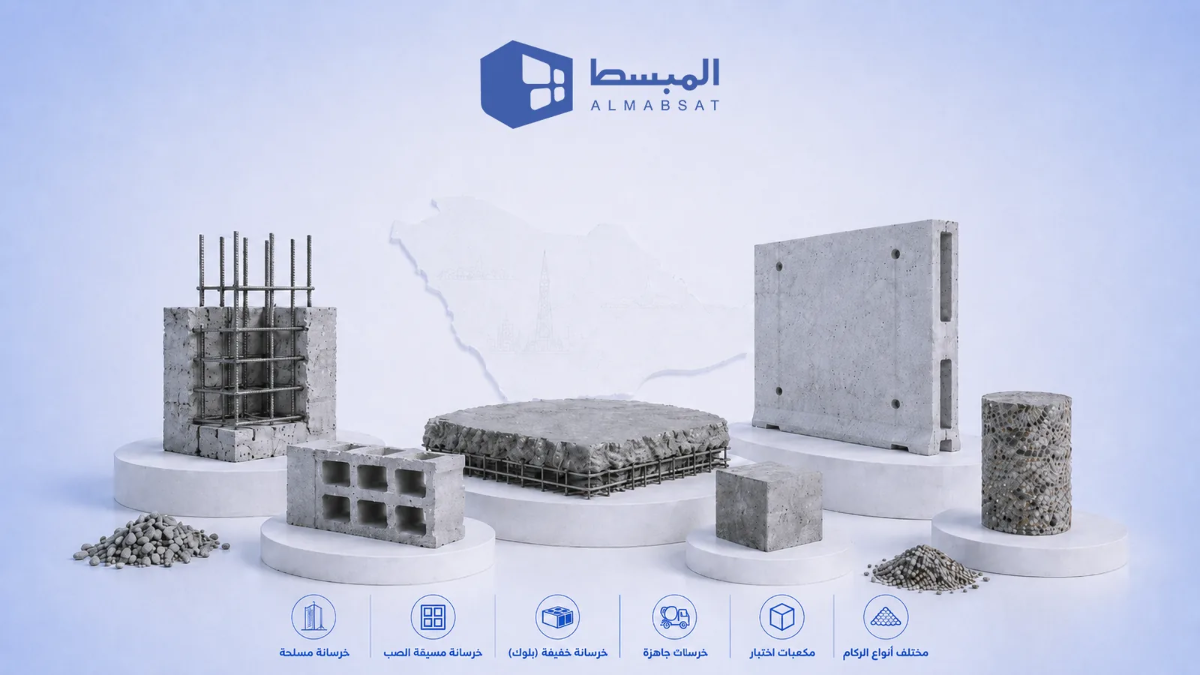
When it comes to construction in Saudi Arabia, the types of concrete used play a central role in determining the strength and quality of structures. With a wide range of options — from plain mixes to specialized formulations — you can achieve outstanding results that meet the needs of every project. From the high-rise towers of major cities to small facilities in remote areas, the right type of concrete ensures structural stability and the ability to withstand harsh environmental and climate conditions.
Types of Concrete Used in Saudi Arabia
Concrete is one of the most important materials in the construction industry, and it forms the foundation of countless projects across the Kingdom. The types of concrete used vary by application and by the technical properties each project requires. Below we walk through the most common variants and where each one fits best.
1. Plain Concrete
Plain concrete is the most widely used type in the Kingdom. It is made from a mix of cement, sand, gravel, and water, without any steel reinforcement. It is typically used in foundations that don't carry heavy loads, such as sidewalks, floors, and walkways.
Advantages:
- Low cost.
- Quick to place.
- Materials are easy to source.
Drawbacks:
- Weak tensile strength.
- Not suitable for heavy loads.
2. Reinforced Concrete
Reinforced concrete adds steel reinforcement bars to boost strength and durability. It is used in bridges, residential and commercial buildings, and any structure that needs to carry heavy loads.
Advantages:
- High load-bearing capacity.
- Resistant to cracking.
- Long-term durability.
Drawbacks:
- Higher cost than plain concrete.
- Takes longer to place because of the reinforcement work.
3. Precast Concrete
Precast concrete is manufactured off-site in a controlled factory environment as ready-made pieces (columns, beams, panels) and then transported to the project site for installation. This type stands out for its build speed and consistent quality thanks to tight control over the manufacturing process.
Advantages:
- Fast to install.
- High, controlled quality.
- Lower maintenance needs.
Drawbacks:
- Transport and installation costs.
- May need a large staging area on site.
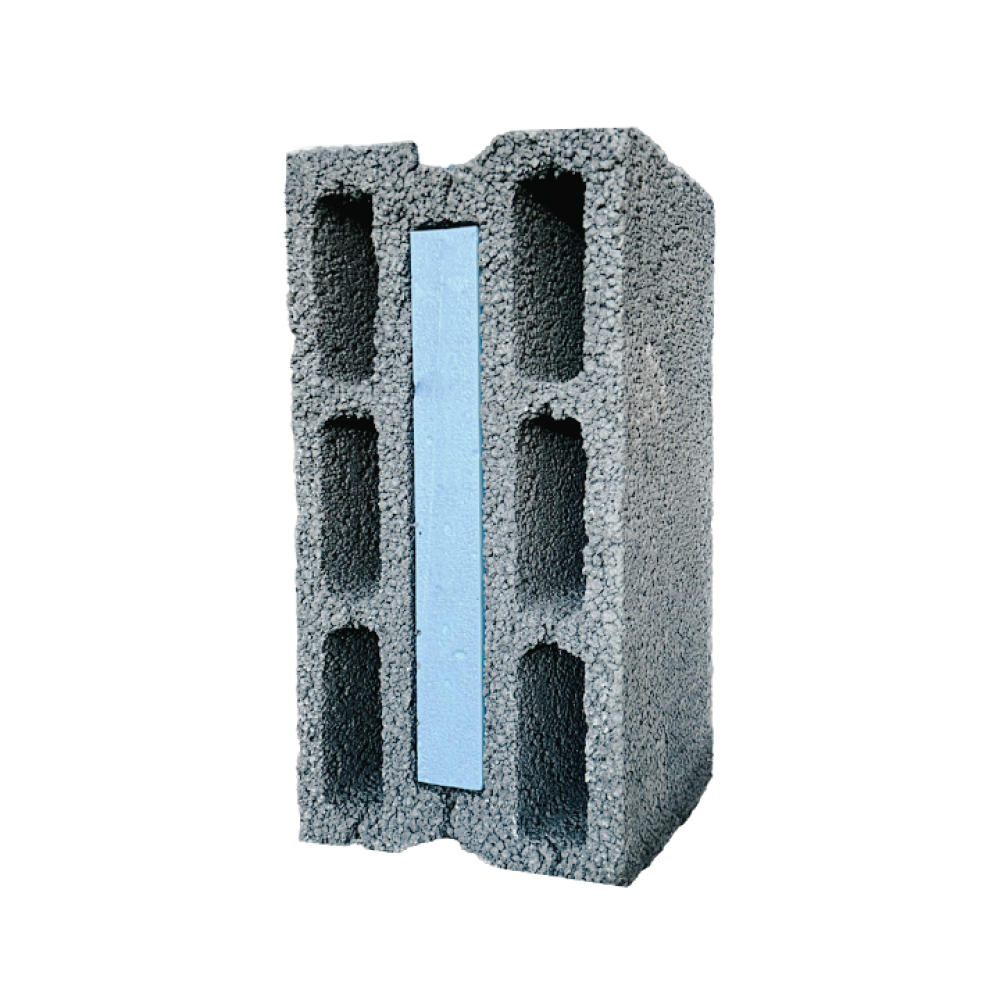
For a next-generation building experience, check out the 20 cm blue insulated volcanic block from Almabsat — an ideal choice for exceptional durability and excellent thermal and acoustic insulation. Its natural properties help cut energy consumption and create comfortable, sustainable environments, making it a great fit for residential and commercial projects alike.
4. High-Strength Concrete
High-strength concrete is engineered to carry very heavy loads, and it is used in large projects like towers, bridges, and multi-story buildings. It is produced using specific cement grades and admixtures that significantly increase its strength.
Advantages:
- Very high load capacity.
- Delivers high structural stability.
Drawbacks:
- Higher cost.
- Requires specialized components and close technical supervision.
5. Fiber-Reinforced Concrete
Fiber-reinforced concrete includes synthetic or natural fibers — such as glass or steel fibers — that improve its mechanical properties and increase resistance to cracking and failure.
Advantages:
- Excellent crack resistance.
- Improved long-term strength.
Drawbacks:
- Costs can be high.
- Requires careful planning to use correctly.
The types of concrete used in Saudi Arabia vary widely to meet different project demands — residential, commercial, or industrial. The right choice depends on required strength, load resistance, cost, and environmental factors. With modern technologies, advanced concrete types now offer high durability and sustainability for projects of any size.
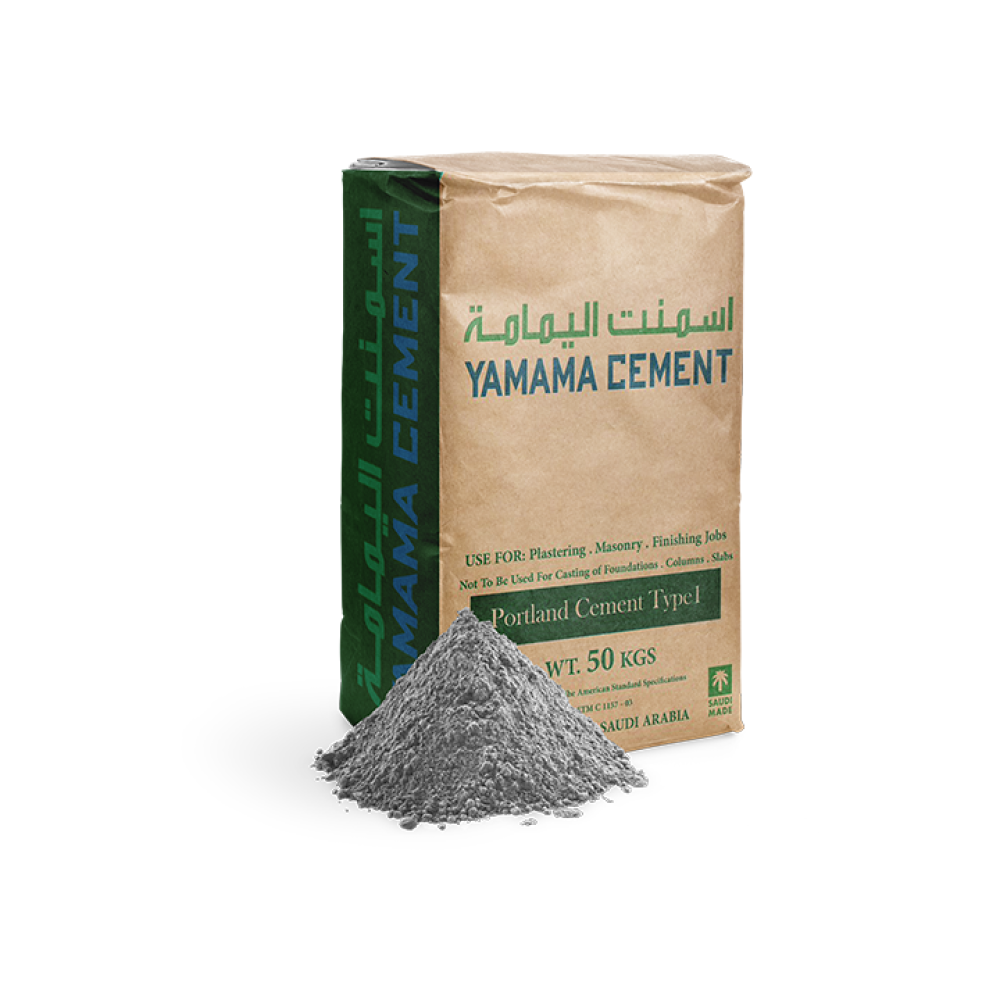
Discover top quality with Yamama Cement — Ordinary from Almabsat, the ideal choice for any building project that needs a strong, reliable foundation. Yamama Cement is known for its outstanding quality and excellent performance across a wide range of construction applications, ensuring precision and unmatched durability.
In the end, choosing the right type of concrete is the secret to a strong, sustainable, and safe build. By understanding the types of concrete and their proper uses, you can strike the perfect balance between durability and aesthetics in any project — from large commercial developments to private homes. Always remember: the right material choice is the foundation of every long-lasting structure.
To buy essential construction materials at the best quality and competitive prices, visit Almabsat for everything you need to start your project with confidence:
[[almabsat.com]]
General Disclaimer:
The information provided in this article is intended for general awareness purposes, aimed at helping readers better understand construction materials, procurement processes, and make more informed decisions. While Almabsat takes care in preparing and reviewing this content, every project is unique, and technical specifications, quantities, prices, execution methods, regulations, and manufacturer instructions may vary.
Therefore, this content should not be considered a substitute for engineering, technical, or professional consultation. It is recommended to consult engineers, consultants, and relevant authorities, and to review technical specifications and manufacturer instructions before making any design, execution, or purchasing decisions.
If this article includes any prices or price indicators, they are for guidance purposes only and may vary depending on the city, quantity, brand, purchase date, and market conditions.
If you need assistance with quantity estimation, BOQ review, or obtaining a quotation, the Almabsat team will be happy to assist you.