 Almabsat
 العربية
 English
 中文
中文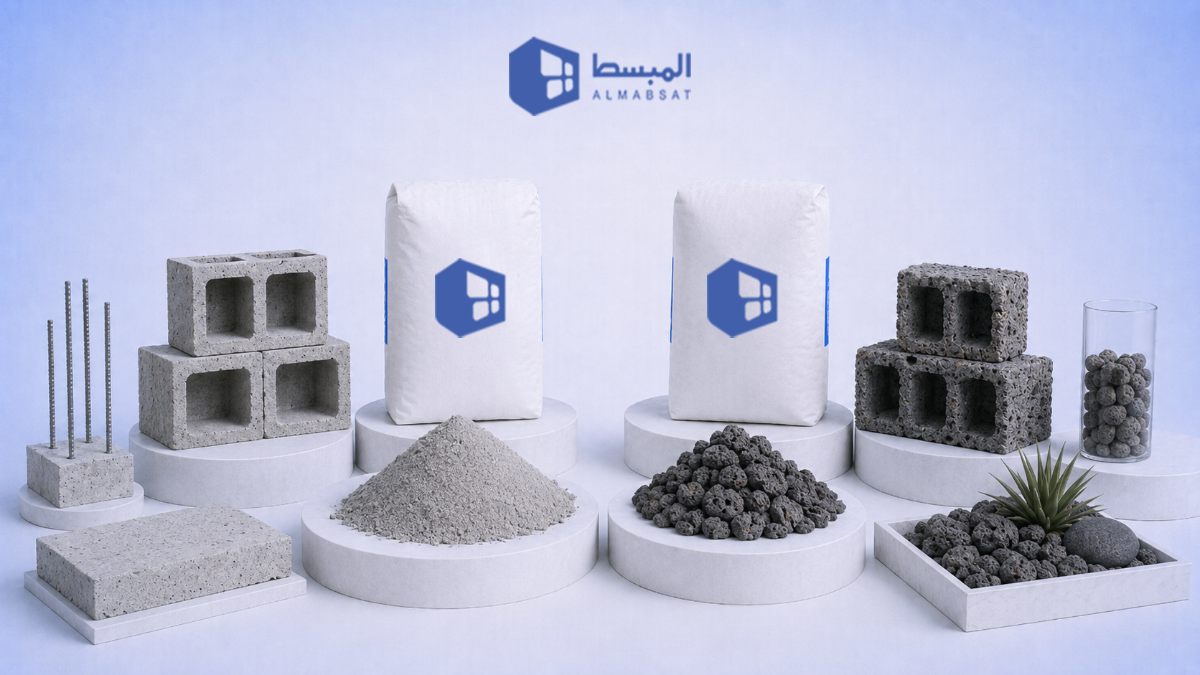
When planning any construction project, choosing the right building materials is an essential step to ensure quality and durability. Among the materials that carry great importance in the world of construction, cement block and volcanic (pumice) block stand out as two main options used widely in building walls and structural frames. But have you ever wondered what the difference between cement block and volcanic block actually is? Is the difference only about the materials used, or are there direct effects on thermal insulation, strength, and weight? We'll take you on a detailed tour that explains the unique properties of each type — whether you're after maximum durability or ideal thermal insulation, follow along to discover which one suits you best.
Get to know the difference between cement block and volcanic block
When we talk about building materials, block (brick) is one of the core foundations that most construction relies on. But did you know there are different types of block, the most well-known being cement block and volcanic block? The difference between them may seem simple at first glance, but it actually reflects a major variation in properties, uses, and even environmental impact. Let's explore the difference between cement block and volcanic block in a fresh way to understand both.
1. Composition and components: what makes each type?
The main difference between cement block and volcanic block lies in the components used to manufacture them.
- Cement block:
- Made from a mix of cement, sand, and water, sometimes with chemical additives to improve its strength and durability.
- The mix is pressed into special molds and dried to turn into solid blocks ready for use.
- Volcanic block:
- Made from natural materials such as volcanic stone (pumice) or volcanic ash, which are distinguished by their light weight and porosity.
- These materials are sometimes mixed with cement to increase their strength, but they remain lighter compared to cement block.
2. Weight: lighter or heavier?
Weight is one of the main differences between the two types, and it affects how each is used in construction.
- Cement block:
- Distinguished by its relatively heavy weight, making it suitable for projects that require high durability and load-bearing capacity.
- It may require strong foundations to support its weight, especially in large buildings.
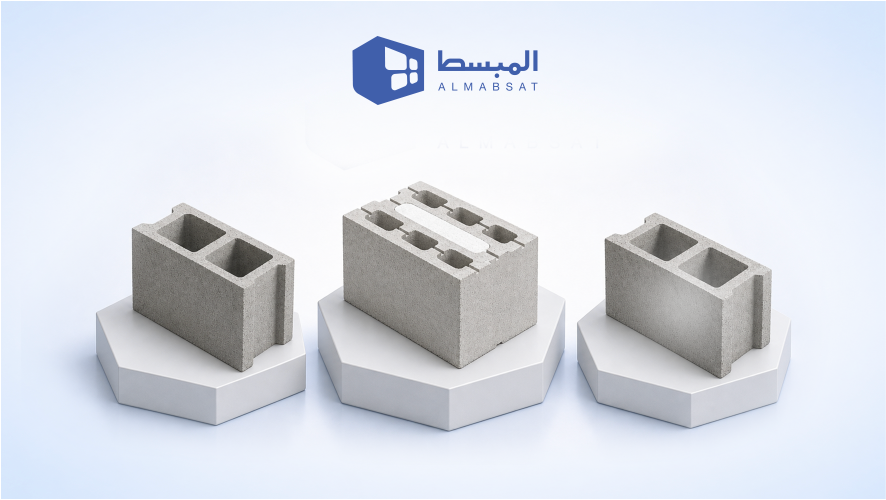
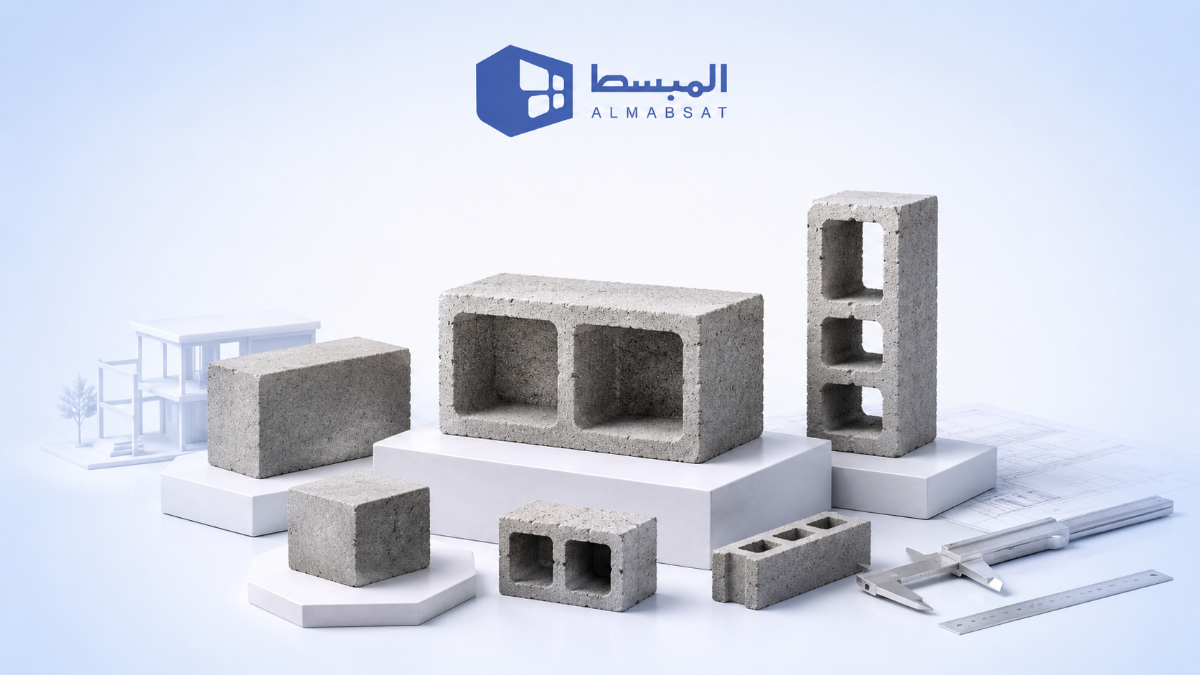
Whether you're building your home, a warehouse, or any commercial facility, standard block from Almabsat is the ideal choice for achieving the hardness and durability you need. Available in various sizes to suit all building needs, it features high load capacity, easy installation, and an economical cost that makes it an ideal choice for residential and commercial projects. Make your project's foundation strong and sustainable with standard block from Almabsat.
- Volcanic block:
- Distinguished by its light weight thanks to its porous nature, making it an ideal choice for projects that need to reduce loads on structures.
- Often used in building interior walls or facades that don't need to bear heavy loads.
3. Thermal and sound insulation: which is better?
In terms of thermal and sound insulation, volcanic block stands out as an excellent choice compared to cement block.
- Cement block:
- Provides limited thermal and sound insulation due to its high density.
- May require additional insulation materials to improve its efficiency in this respect.
- Volcanic block:
- Features excellent thermal and sound insulation properties thanks to its porous nature, making it an ideal choice for areas with hot or cold climates.
- Reduces energy consumption for heating and cooling, making it environmentally friendly.
4. Durability and strength: which is stronger?
When it comes to strength and durability, each type has its own suitable uses.
- Cement block:
- Features high load-bearing capacity, making it suitable for large structural projects such as columns and foundations.
- Considered more resistant to weather conditions and erosion.
- Volcanic block:
- Despite its light weight, it has good strength, but it is less durable compared to cement block.
- Preferably used in non-load-bearing walls or projects that don't require high load capacity.
5. Cost: which is more economical?
Cost is an important factor in choosing the right type of block for the project.
- Cement block:
- Considered lower in cost compared to volcanic block because its components are readily available.
- It is the best option for projects with a limited budget.
- Volcanic block:
- More expensive due to the scarcity of volcanic materials and the costs of extracting them.
- Preferably used in projects that require high-quality thermal or sound insulation.
6. Environmental impact: which is more sustainable?
In an era of environmental awareness, sustainability has become an important factor in choosing building materials.
- Cement block:
- Requires high energy to manufacture, which increases carbon emissions.
- Not easily recyclable.
- Volcanic block:
- Considered more environmentally friendly because it uses natural and recyclable materials.
- Helps reduce energy consumption thanks to its insulating properties.
7. Aesthetics: which is more attractive?
From an aesthetic standpoint, the type of block can affect the overall appearance of the building.
- Cement block:
- Gives a traditional, strong look, but may require painting or finishing to improve its aesthetics.
- Often used in basic structures that are covered later.
- Volcanic block:
- Features a natural, unique appearance, making it an ideal choice for facades or interior decor.
- Can be left without finishing for an elegant, natural touch.
Take your project to a new level of insulation and efficiency with blue insulated volcanic block from Almabsat. Thanks to its ideal 20 cm size, it offers superior thermal insulation that keeps the building cool in summer and warm in winter, reducing energy consumption and providing comfort that lasts. It also features high durability, lighter weight, and excellent resistance to moisture and fire, making it the perfect choice for exterior walls and modern buildings. Make construction more efficient and sustainable with Almabsat's insulated volcanic block.
The difference between cement block and volcanic block is not just a difference in appearance or weight — it's a difference in properties, uses, and environmental impact. While cement block is the ideal choice for large structural projects that require durability and strength, volcanic block comes as an ideal option for projects that need high-quality thermal or sound insulation while preserving the beauty of the appearance. In the end, choosing the right type depends on the nature of the project, the budget, and the desired goals.
To buy the different types of block:
[[almabsat.com]]
General Disclaimer:
The information provided in this article is intended for general awareness purposes, aimed at helping readers better understand construction materials, procurement processes, and make more informed decisions. While Almabsat takes care in preparing and reviewing this content, every project is unique, and technical specifications, quantities, prices, execution methods, regulations, and manufacturer instructions may vary.
Therefore, this content should not be considered a substitute for engineering, technical, or professional consultation. It is recommended to consult engineers, consultants, and relevant authorities, and to review technical specifications and manufacturer instructions before making any design, execution, or purchasing decisions.
If this article includes any prices or price indicators, they are for guidance purposes only and may vary depending on the city, quantity, brand, purchase date, and market conditions.
If you need assistance with quantity estimation, BOQ review, or obtaining a quotation, the Almabsat team will be happy to assist you.